Pixels vs. Pencils: The AI Revolution Hitting Adult Anime Where It Hurts
The Machine Learns to Draw Lewd
Not long ago, producing a polished adult anime scene meant either shelling out serious money to a professional doujin studio or spending years grinding through art fundamentals before your work looked remotely presentable. That calculus has changed — fast. Tools like Stable Diffusion, NovelAI, and a growing constellation of fine-tuned models built specifically for explicit anime-style imagery have made it possible for someone with zero formal training to generate thousands of images in an afternoon.
For the average fan, that sounds like a win. For the artists who've built careers in this niche? It's a gut punch wrapped in a legal gray area.
The adult anime production space in the US has always operated in a complicated middle ground — not quite mainstream, not quite underground. Studios and independent creators have carved out sustainable income streams through Patreon, SubscribeStar, and direct sales on platforms like DLsite and Gumroad. Now, AI-generated content is flooding those same channels, often at lower price points or even for free, and the pressure on human creators is very real.
What the Tech Actually Does Right Now
Let's be honest about capabilities. Current AI image generators, especially those trained on massive datasets of anime-style art, can produce remarkably convincing explicit content. Character consistency has improved dramatically over the past 18 months — a persistent complaint was that AI couldn't keep a character's face stable across multiple panels. Newer techniques like LoRA (Low-Rank Adaptation) fine-tuning let users train small model add-ons on specific characters or styles, solving a lot of that problem.
Video generation is still catching up. Tools like AnimateDiff can produce short looping animations, but anything resembling a full scene with coherent motion remains rough around the edges. That gap is closing, though, and industry watchers expect AI-generated adult anime video to reach a commercially viable quality threshold within the next two to three years.
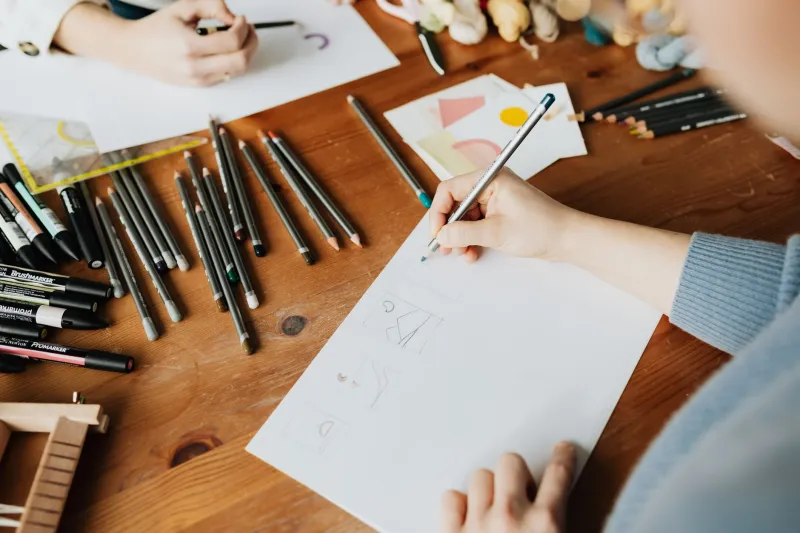
For independent creators, the pitch is obvious: faster output, lower overhead, the ability to test concepts without committing weeks of illustration time. Several smaller US-based adult content creators we spoke with described using AI as a "sketch layer" — generating rough compositions to plan scenes before committing to hand-drawn or 3D-rendered final work. That kind of hybrid workflow is becoming increasingly common.
The Legal Situation Is a Patchwork Nightmare
Here's where things get genuinely complicated, especially for US-based creators and consumers. Federal law offers some baseline frameworks — the PROTECT Act governs obscene visual depictions involving minors, and that applies to AI-generated content just as firmly as it does to hand-drawn art. Full stop, no ambiguity there.
Beyond that hard line, though, the legal landscape gets murky fast. Several states have moved to regulate deepfake pornography involving real people, with California, Virginia, and Texas among those passing laws targeting non-consensual synthetic intimate imagery. The critical distinction in adult anime AI content is that most of it involves wholly fictional characters — but "wholly fictional" is a category that courts haven't fully stress-tested yet. When AI-generated content depicts characters that closely resemble real public figures or even real voice actors who've portrayed those characters, the legal exposure becomes non-trivial.
Copyright is its own headache. The US Copyright Office has consistently ruled that purely AI-generated images lack human authorship and therefore can't be copyrighted. For creators trying to build a brand around AI-assisted work, that's a serious commercial vulnerability. Anyone can technically reproduce and redistribute your AI-generated content without legal consequence — a reality that has some creators deliberately keeping their human-touch elements prominent enough to establish authorship.
What Working Artists Are Actually Saying
We reached out to several professional adult anime artists and doujin creators active in US-adjacent online communities. The responses ranged from resigned pragmatism to outright anger.
One illustrator who's been producing explicit doujinshi for about eight years put it bluntly: "My commission waitlist used to be three months. Now people message me asking why they should pay my rates when they can prompt something 'good enough' in ten minutes. The answer is quality and soul, but not everyone cares about that distinction."
Another creator took a more adaptive stance, describing how they've leaned into AI tools for background generation and color blocking while keeping character work entirely hand-drawn. "I'm not going to pretend the technology doesn't exist. I'd rather use it to do more work in less time than get left behind."
There's also a cohort of newer creators who entered the space specifically because AI lowered the barrier. Some of them are building genuine audiences and contributing to the community's diversity of content. Dismissing all AI-assisted adult anime as artistically worthless doesn't hold up when you actually look at what some of these creators are producing.
The Ethical Dimension Nobody Wants to Talk About Straight
Beyond the legal and economic angles sits a thornier set of questions about what synthetic content does to the broader culture around adult anime. A significant chunk of the appeal of creator-made adult content has always been the relationship between artist and audience — Patreon tiers, commission queues, community polls about what gets made next. AI-generated content can mimic the output but not the relationship.
There's also a real conversation happening about training data. Many of the models producing explicit anime imagery were trained on datasets that included artists' work without consent or compensation. That's not a hypothetical grievance — it's a documented reality that has fueled ongoing litigation and pushed some artists to watermark work more aggressively or pull back from public sharing entirely. When the machine learns from human creativity without acknowledgment, the ethical ledger gets pretty unbalanced.
Where This Is All Heading
AI-generated adult anime content isn't going away. The tools are too accessible, the demand is too high, and the economic incentives for platforms to host synthetic content alongside human-made work are too strong. What's still very much in play is how the community responds — whether platforms develop meaningful labeling standards for AI content, whether legal frameworks catch up to protect both artists and consumers, and whether the human creators who've built this niche can find sustainable footing in a landscape that's shifting under their feet.
For fans browsing databases like this one, the practical takeaway is worth keeping in mind: the content you're consuming increasingly comes from a mix of human hands and machine outputs, and those two things aren't always labeled clearly. Supporting creators whose work you value directly — through subscriptions, commissions, or just signal-boosting their platforms — remains one of the more concrete ways to influence which side of this tension wins out.
The pixels are getting smarter. Whether that's progress depends entirely on who you ask.